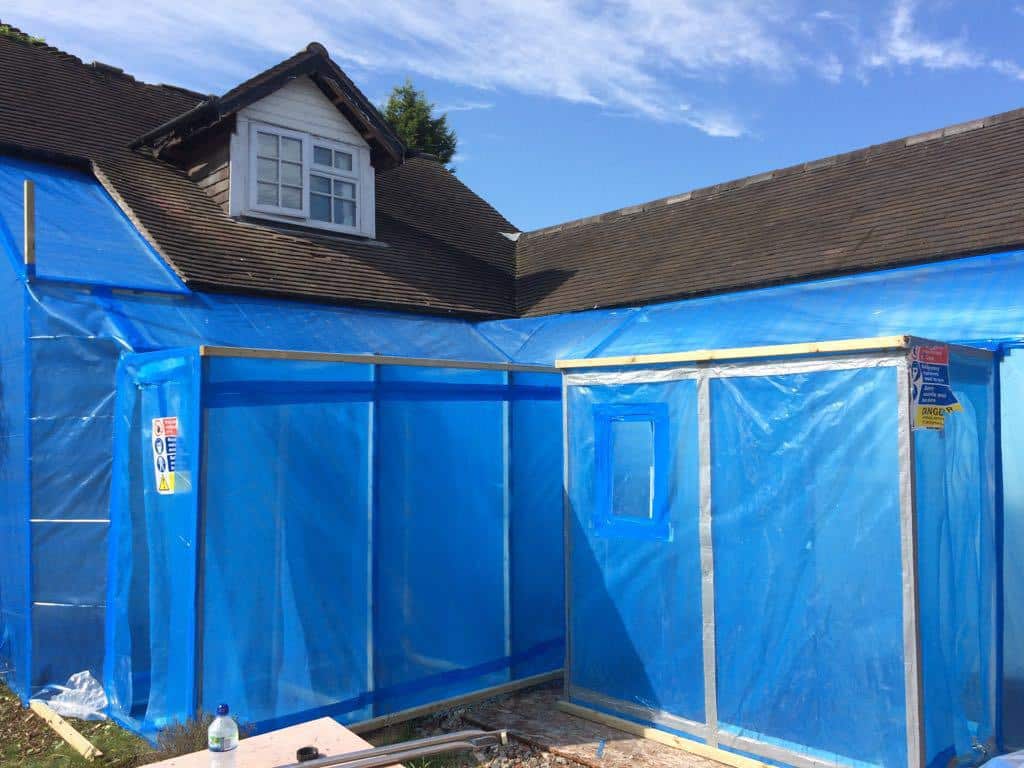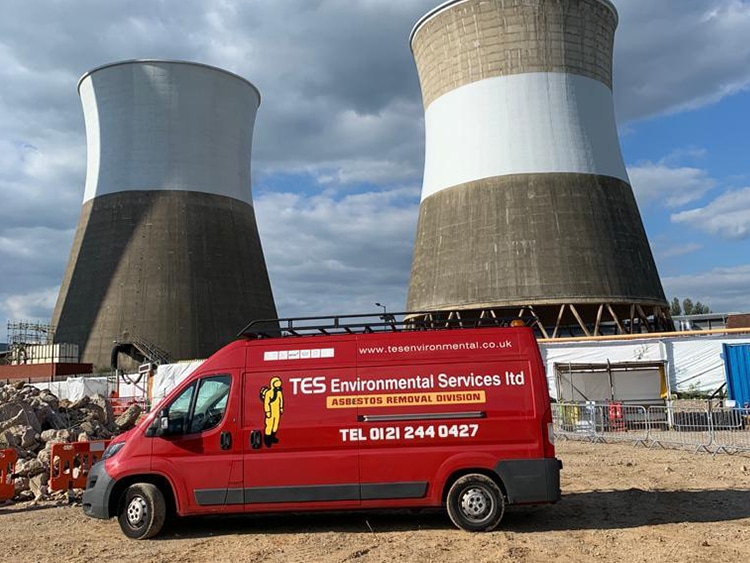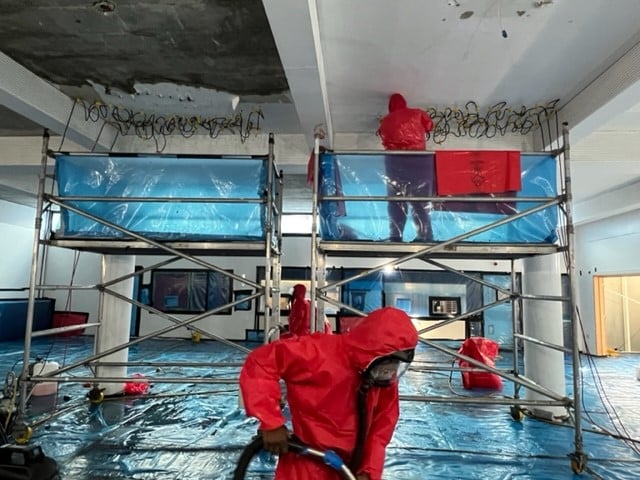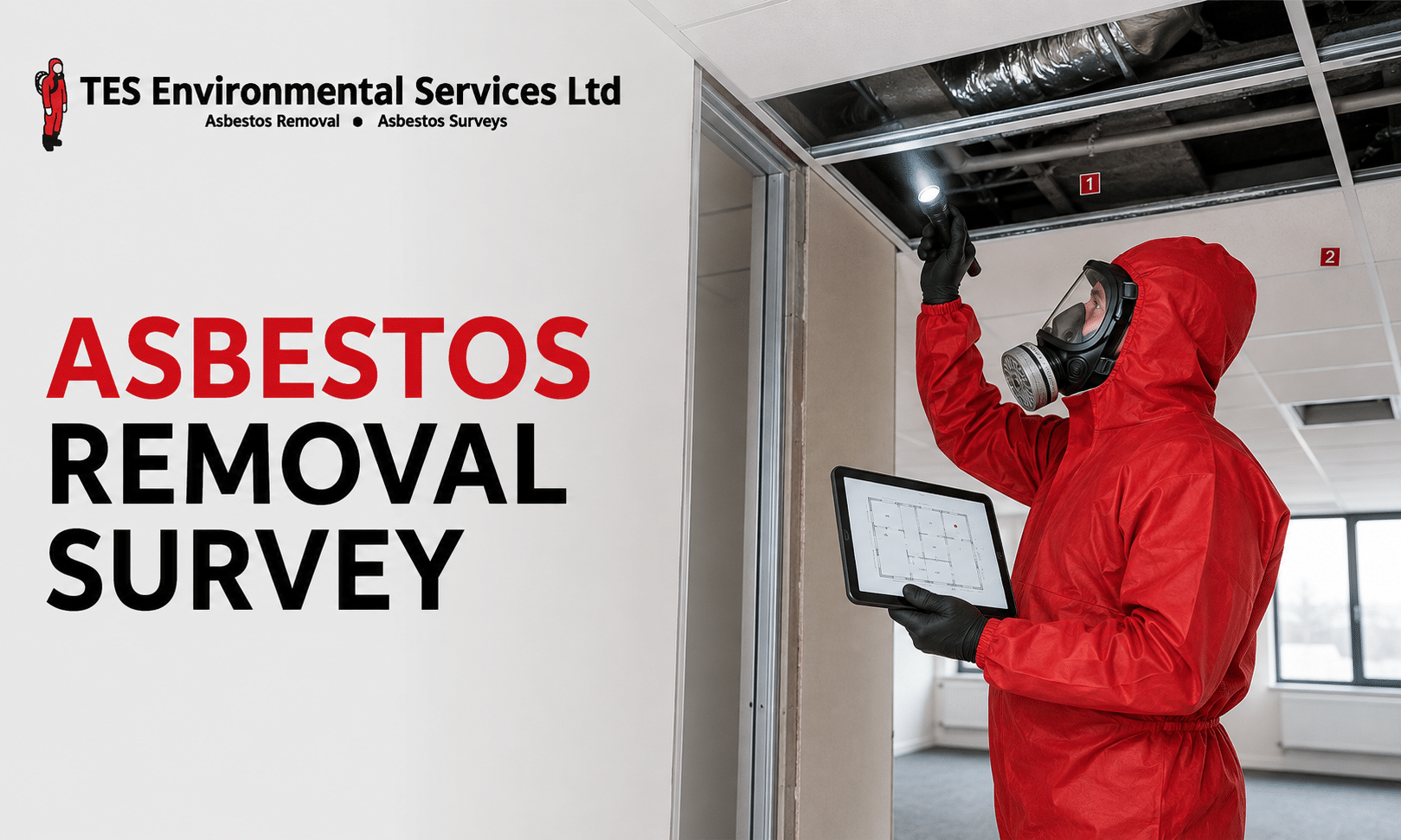
Before asbestos can be managed or removed safely, it must first be identified. An asbestos removal survey helps establish where asbestos containing materials may be located, what condition they are in and how they could be affected by planned work.
Asbestos was widely used in British construction before it was completely banned in 1999. It can still be present in homes, offices, schools, factories, warehouses and public buildings that were constructed or refurbished before 2000.
TES Environmental Services Ltd provides professional asbestos surveys for domestic, commercial and industrial properties throughout the UK. Our surveys give property owners, dutyholders and contractors the information they need to plan safe asbestos management and removal work.
What Is an Asbestos Removal Survey?
The phrase asbestos removal survey is commonly used to describe an inspection carried out before asbestos removal, refurbishment or demolition. Its purpose is to identify asbestos containing materials within a property or defined work area so that suitable action can be planned.
Under current HSE guidance, the two recognised survey types are a management survey and a refurbishment or demolition survey. The correct survey depends on why the building is being inspected and what work is proposed.
A management survey identifies materials that could be disturbed during normal occupation, routine maintenance or installation work. A refurbishment or demolition survey is more intrusive and investigates areas that will be affected by structural work.
If asbestos removal is already being considered, the survey must provide enough information to prepare a suitable risk assessment, plan of work and removal specification.
Why Is a Survey Needed Before Asbestos Removal?
Removing asbestos without accurate information can expose workers, occupants and visitors to harmful fibres. It may also result in important materials being missed or unnecessary work being completed.
A professional asbestos removal survey helps identify the location, extent, type and condition of asbestos containing materials. This information allows the project team to determine which materials should be removed, which may be suitable for encapsulation and which can remain safely managed in place.
The findings also help the asbestos removal contractor estimate the required resources, control measures, waste arrangements and timescale. Identifying asbestos early can reduce unexpected costs and prevent delays once building work has started.
What Is the Difference Between a Management Survey and a Refurbishment or Demolition Survey?
A management survey is designed for the normal occupation and use of a building. It aims to locate asbestos that could be disturbed during everyday activities, cleaning, maintenance and minor installation work.
The survey may include visual inspection, limited access into concealed areas and representative sampling. The resulting report can be used to create or update an asbestos register and management plan.
A refurbishment or demolition survey is required before work that will disturb the building fabric. It is intrusive and may involve opening walls, lifting floor coverings, accessing ceiling voids and investigating ducts or enclosed spaces.
According to the Health and Safety Executive, this survey must locate and identify asbestos containing materials, including those hidden within the structure, before major refurbishment or demolition begins.
The surveyed area normally needs to be vacated because destructive inspection may disturb asbestos. The scope should match the proposed work so that every relevant part of the building is examined.
When Should You Arrange an Asbestos Removal Survey?
An asbestos removal survey should be arranged before work begins if asbestos may be present and could be disturbed.
Typical projects include office refurbishments, shop renovations, school improvement works, factory alterations and the demolition of older buildings. Domestic projects may include extensions, loft conversions, kitchen replacements, bathroom renovations or the removal of garages and outbuildings.
A survey may also be needed when damaged material has been discovered or an existing asbestos register contains incomplete information. If previous survey reports do not cover the full work area, additional inspection may be required.
Early planning is essential. The survey should be completed before contractors begin intrusive work and before the final project programme is agreed.
What Does an Asbestos Surveyor Inspect?
The surveyor begins by reviewing the property, the proposed work and any available asbestos information. Existing surveys, building plans, maintenance records and removal documents can help define the scope.
Depending on the survey type, the inspection may include rooms, corridors, stairwells, basements, lofts, plant rooms and service cupboards. The surveyor may also investigate suspended ceilings, risers, ducts, lift shafts, floor voids and external areas.
Common asbestos containing materials include asbestos insulating board, pipe and boiler insulation, sprayed coatings, ceiling tiles, textured coatings, floor tiles and cement products. Asbestos may also be present in fire doors, partition walls, roof sheets, gutters, soffits and old electrical equipment.
Representative samples are collected where necessary and sent to a UKAS accredited laboratory for analysis. Sampling points and confirmed materials are then recorded within the survey report.
What Information Should the Survey Report Include?
A useful asbestos removal survey report should clearly explain what was inspected, what was found and whether any areas could not be accessed.
The report should identify the location, material type, quantity and condition of confirmed or presumed asbestos. It should include photographs, sample results, plans where appropriate and recommendations for managing the identified risks.
Any access restrictions must be clearly recorded. An area that has not been inspected may need to be presumed to contain asbestos until further investigation can be completed.
The report should be easy for property managers, contractors and asbestos removal specialists to understand. Survey information must be shared with everyone who could disturb the identified materials.
What Happens After the Survey?
If asbestos is found, the next step depends on its condition, location and the work being planned. Material that is in good condition and unlikely to be disturbed may sometimes remain in place under an asbestos management plan.
Encapsulation may be suitable where a protective coating or enclosure can prevent damage and reduce the potential for fibre release.
Removal is likely to be required when asbestos is damaged, deteriorating or directly affected by refurbishment or demolition. The survey findings allow an appropriate contractor to prepare a detailed removal plan.
Higher risk work involving sprayed coatings, pipe insulation and many asbestos insulating board materials must be completed by an HSE licensed contractor. Following certain licensed removal projects, an independent UKAS accredited analytical organisation completes the required clearance procedures before a certificate of reoccupation can be issued.
Choosing a Competent Asbestos Surveyor
An asbestos survey should be carried out by someone with suitable knowledge, training and experience. The surveyor should understand the risks associated with sampling and intrusive inspection.
The HSE strongly recommends using an asbestos surveying organisation accredited by UKAS to the relevant inspection standard. A competent provider should demonstrate independence, impartiality and effective quality management.
Before appointing a surveyor, provide clear information about the building and the proposed work. An incomplete scope can prevent the surveyor from accessing all relevant areas and reduce the value of the final report.
Arrange an Asbestos Removal Survey
If you are planning refurbishment, demolition or asbestos removal, arrange the appropriate survey before work begins. Accurate information helps protect people, supports legal compliance and allows your project to be planned effectively.
TES Environmental Services Ltd provides professional asbestos surveys, sampling, testing and licensed asbestos removal for clients throughout the UK. Our team can help determine the appropriate type of survey and explain the next steps if asbestos is identified.
To arrange an asbestos removal survey, call TES Environmental Services Ltd on 0121 244 0427 or submit an enquiry through our website.